
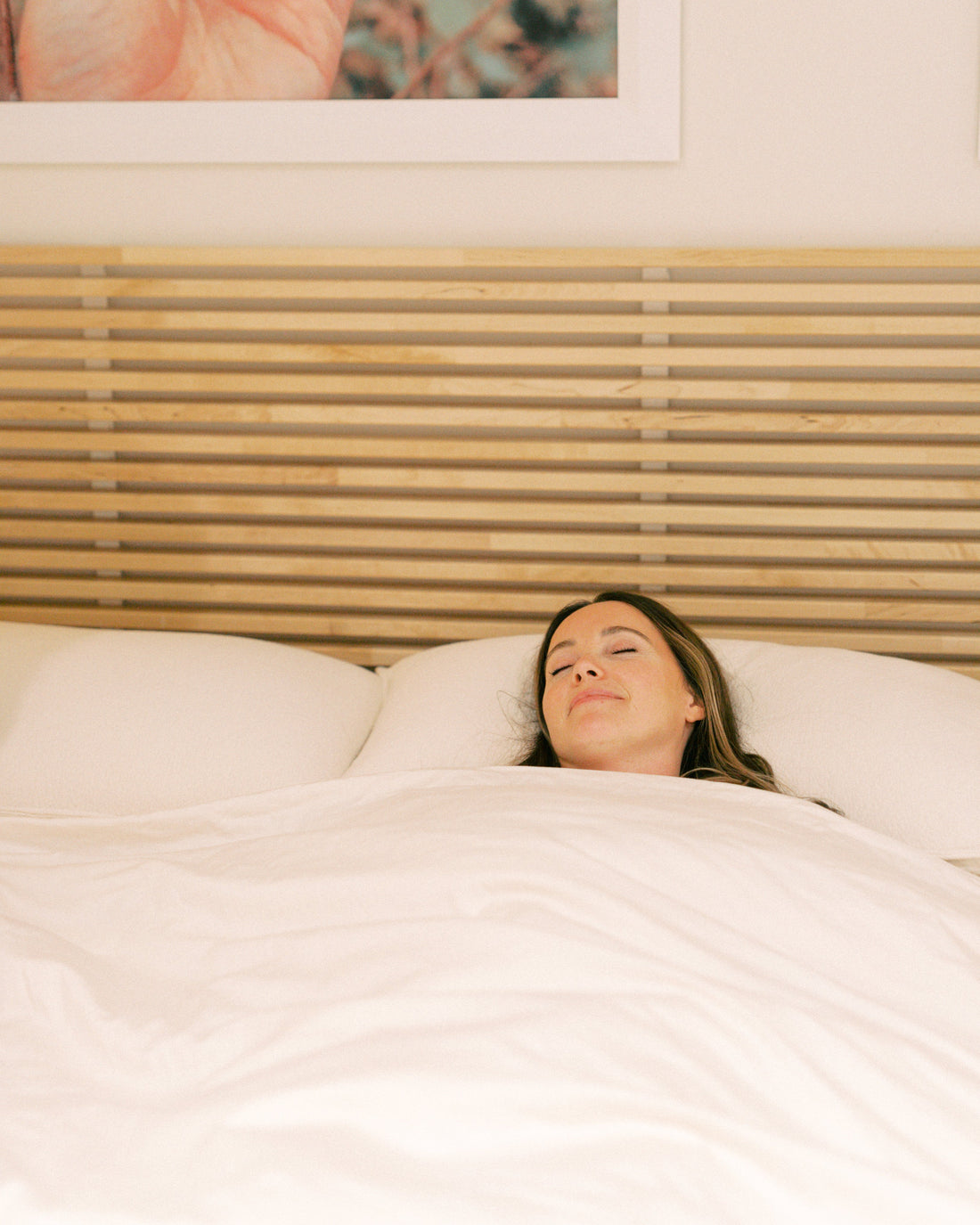
Cooling sheets. Cooling pillows. Cooling comforters.
These days, it seems like every bedding company is promising a cooler night’s sleep. But what most people don’t realize is that many “cooling” products rely on synthetic materials, chemical treatments, and heavily processed fabrics to create that effect.
And while these technologies may feel cool to the touch at first, they aren’t always supporting truly healthy, breathable sleep.
So what’s really behind cooling bedding — and why are so many people still waking up hot and uncomfortable?
What Is “Cooling” Bedding Made Of?
Many cooling bedding products are made using:
- Polyester or microfiber fabrics
- Synthetic “cooling” yarns
- Gel-infused foams
- Phase-change materials (PCM)
- Chemical cooling or moisture-management treatments
These materials are generally designed to either temporarily pull heat away from the body or create a cooler surface sensation.
The Problem with Synthetic Cooling Technologies
While these products are heavily marketed, many are still fundamentally synthetic and not naturally breathable.
Gel-Infused Memory Foam
Gel-infused memory foam is one of the most common examples of cooling technology. While the gel may initially feel cool, memory foam itself still tends to trap heat because of its dense petroleum-based structure.
Over time, many people still experience:
- Heat build-up throughout the night
- Night sweats
- Poor airflow
- Restless sleep
Polyester and Microfiber Fabrics
Many cooling sheets are also made from polyester blends engineered to feel silky or cool at first touch. But synthetic fibers often hold onto heat and moisture over time rather than allowing the body to breathe naturally.
Heavy Processing and Chemical Finishes
Some cooling fabrics also rely on chemical finishes designed to enhance softness, stain resistance, or cooling performance. As consumers become more ingredient-conscious in other areas of life, many are beginning to question what’s actually being used in their bedding as well.
Common concerns include:
- VOCs (volatile organic compounds)
- Microplastic shedding
- Chemical exposure during sleep
- Heat retention from synthetic foams and fibres
Considering we spend nearly a third of our lives in bed, the materials surrounding us matter.
Why Natural Fibers Sleep Cooler Naturally
True cooling isn’t about icy fabrics or chemical gels. It’s about breathability, airflow, and moisture balance.
Organic Cotton
Organic cotton is lightweight, breathable, and soft against the skin. Unlike polyester, it allows air to circulate naturally and doesn’t trap as much heat.
Organic Wool
Wool is one of nature’s best temperature regulators. It can absorb and release moisture without feeling damp, helping your body stay balanced throughout the night.
Contrary to popular belief, wool isn’t just for winter — it’s actually excellent for hot sleepers because it helps regulate temperature year-round.
Natural Latex
Unlike memory foam, natural latex has an open-cell structure that allows for better airflow. It offers pressure relief without the heat retention commonly associated with foam mattresses and toppers.
Linen
Linen is another highly breathable natural fiber known for its airy feel and moisture management.
So What Should You Look For?
If you tend to sleep hot, focus less on “cooling technology” and more on naturally breathable materials. Look for:
- Organic cotton sheets
- Wool duvets or toppers
- Natural latex instead of memory foam
- Breathable mattress protectors
- Certifications like GOTS and GOLS
These materials work with your body rather than relying on artificial cooling effects.
At the end of the day, truly comfortable sleep isn’t about chasing the latest cooling technology — it’s about creating a breathable, balanced sleep environment. Natural materials like organic cotton, wool, linen, and latex have been regulating temperature long before synthetic cooling fabrics entered the market.
Sometimes, the simplest materials are the ones that work best.