
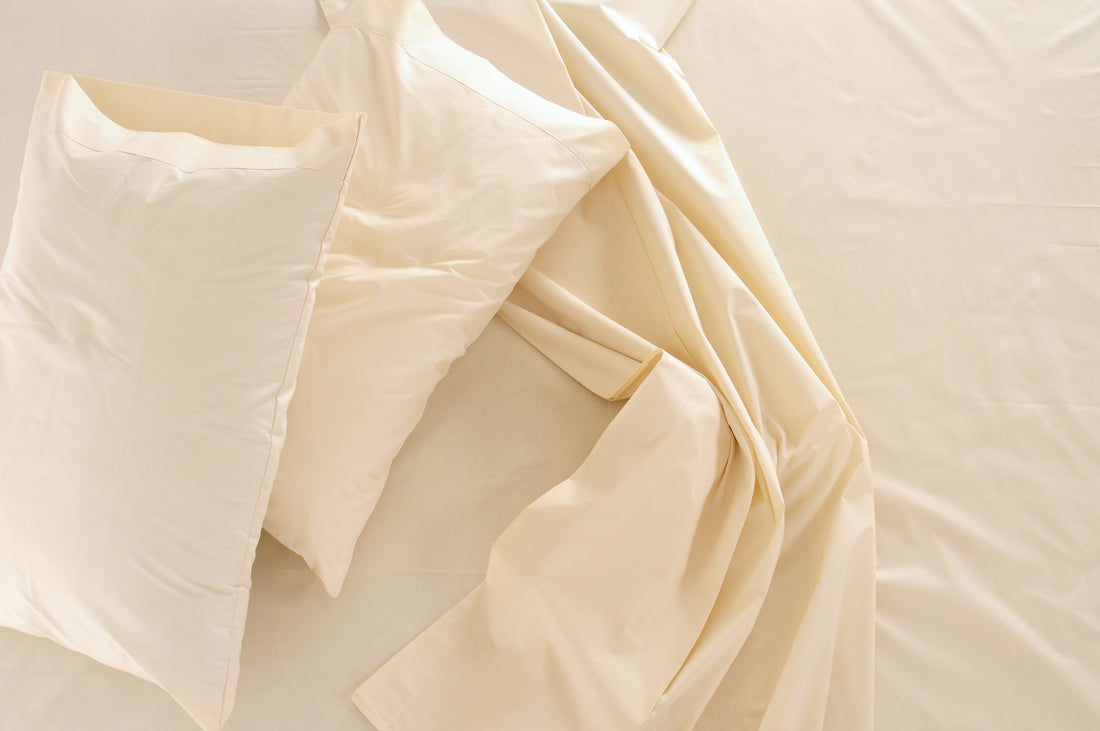
Have you ever noticed that natural bedding simply feels different?
Not just softer or cozier — but calmer, more breathable, and more comfortable against your skin? That’s because the fibres surrounding your body every night play a huge role in temperature regulation, airflow, moisture balance, and overall comfort.
And while many modern fabrics are marketed as “natural,” the truth is that not all fibres are created equally.
Natural vs Synthetic: What’s the Difference?
Natural fibres come from plants or animals, while synthetic fibres are typically petroleum-based and manufactured through chemical processes.
Natural fibres generally:
- Breathe better
- Regulate temperature more effectively
- Absorb and release moisture naturally
- Feel softer and less static against the skin
Synthetic fibres are often designed for durability, stretch, or low cost — but may trap heat and moisture more easily.
Considering we spend nearly a third of our lives in bed, the materials touching our skin every night matter more than most people realize.
Organic Cotton: Simple, Breathable, and Timeless
Organic cotton remains one of the most trusted fibres for bedding because it’s breathable, durable, and gentle on skin.
Unlike many synthetic fabrics, cotton allows air to circulate naturally rather than trapping heat against the body. It also avoids the pesticides and chemical finishes commonly associated with conventional cotton production.
For sheets and pillowcases especially, organic cotton creates that crisp, breathable feeling many people naturally gravitate toward.
Wool: Nature’s Temperature Regulator
Wool is one of the most misunderstood fibres in bedding. Many people associate it with heavy winter blankets, but wool is actually one of the best materials for temperature regulation year-round.
Wool naturally:
- Helps wick away moisture
- Regulates body temperature
- Resists dust mites and mold
- Maintains breathability throughout the night
Rather than trapping heat, quality wool bedding helps create a balanced sleep environment.
Linen: Airy and Breathable
Made from flax fibres, linen has become increasingly popular for its relaxed texture and exceptional airflow.
Linen is especially loved by hot sleepers because it feels light, breathable, and moisture-managing without clinging to the body.
Bamboo, Rayon, Modal, and TENCEL™: Not Always What They Seem
This is where things become more confusing in the textile world.
Many fabrics marketed as “natural” are actually heavily processed before becoming soft textiles.
Bamboo Rayon & Bamboo Viscose
Most bamboo bedding on the market is not raw bamboo fibre. It’s bamboo that has been chemically processed into rayon or viscose.
While bamboo fabrics may feel soft and silky, many consumers are surprised to learn how intensive the manufacturing process can be.
Modal & TENCEL™
Modal and TENCEL™ also begin as plant material (usually wood pulp), but they go through additional processing to transform the fibres into fabric.
Compared to polyester, these fabrics are often softer and more breathable, but they still exist somewhere between natural and synthetic.
Polyester and Microfiber: The Synthetic Standard
Polyester is one of the most common fibres used in bedding today because it’s inexpensive, wrinkle-resistant, and easy to manufacture.
But polyester is also:
- Petroleum-based
- Less breathable
- More likely to trap heat
- Associated with microplastic shedding during washing
Microfiber fabrics are essentially ultra-fine polyester fibres. While they may feel soft initially, many people find they create a stuffier, less breathable sleep environment over time.
Why Fibre Choice Matters for Sleep
Your bedding affects more than just comfort. The fibres surrounding your body every night can influence:
- Temperature regulation
- Moisture balance
- Skin sensitivity
- Breathability
- Overall sleep quality
That’s why many people notice such a difference when switching from synthetic bedding to natural materials like cotton, wool, or linen.
Choosing Better Bedding
When shopping for bedding, look beyond marketing terms like “cooling,” “performance,” or even “natural.” Instead, pay attention to:
- Fibre content
- Processing methods
- Breathability
- Certifications
- How the fabric actually feels against your skin
Sometimes simpler, more traditional materials truly perform best.
At the end of the day, natural fibres have been supporting comfortable sleep long before synthetic performance fabrics entered the market. And while modern textiles continue to evolve, many people are rediscovering that breathable, minimally processed materials simply feel better to sleep in.